Tubi advertising means buying video ads on Tubi, Fox's free ad-supported streaming TV (FAST) service. Viewers watch without a subscription, so the whole audience sees ads. There is no ad-free tier.
Cost (planning ranges, not a Tubi rate card): On-page and related Adwave resources commonly plan Tubi standard video around ~$15-$25 CPM, with programmatic via Adwave often cited in a wider ~$15-$35 band depending on targeting and market. Direct / premium formats (Wrappers, Carousel, Tubi Prime) price higher and usually need a Fox sales relationship. Adwave campaigns that can include Tubi inventory among 100+ premium channels start from $30/day (individual signups typically get a $60 starter credit).
Targeting: Geographic (DMA, state, city, ZIP, radius), demographic (age, gender, income via programmatic), plus Fox/Tubi advanced options (Tubi Moments contextual, Tubi Prime lineups, addressable) on higher-tier buys.
How to advertise on Tubi: Fox Advertising direct, Tubi's self-serve platform (Universal Ads), a DSP, or Adwave for SMB-friendly multichannel buying with AI 30-second creative from a URL.
Tubi is the largest free ad-supported streaming TV platform in the United States. Fox Corporation acquired it in 2020, and the service has since crossed major ad-revenue milestones while expanding originals, live channels, and ad products. For advertisers, the draw is simple: scale, a fully ad-supported audience, and planning CPMs that often undercut subscription-gated streamers.
This hub covers formats, cost planning, audience, targeting, buy paths, and measurement. For local budget examples and creative specs aimed at single-location businesses, see the sibling guide: Tubi advertising for small business.

Why advertisers buy Tubi
Tubi sits in the value lane of streaming TV: free for viewers, ad-supported, and useful when you need living-room reach without a premium CPM. Treat it as a learning and volume channel, then decide whether mid-tier or premium streaming deserves a share of spend.
Tubi's pitch for brands and SMBs rests on four practical points.
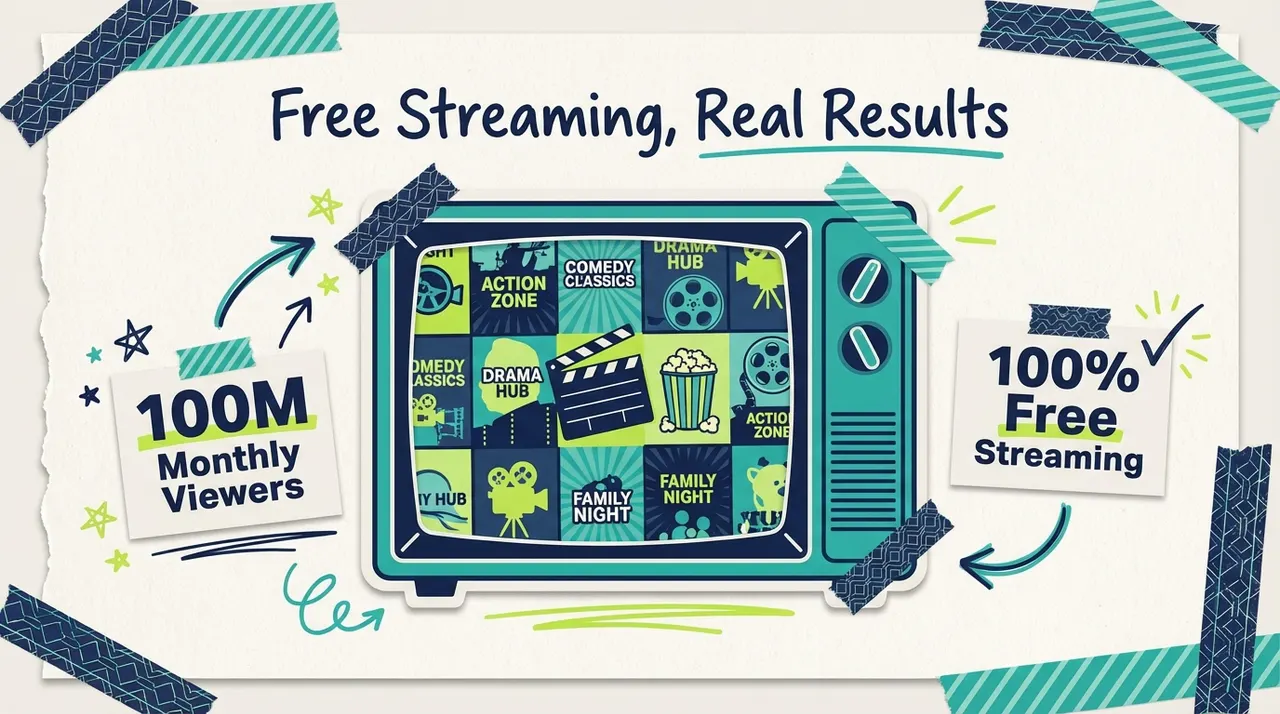
100% ad-supported audience. Every major streamer now has an ad tier. Tubi is free end-to-end, so every viewer is in the ad-supported pool. On Hulu and Peacock, a share of the audience sits on ad-light or ad-free plans; on Tubi, ads are the product model.
Scale. Live hub copy cites 100 million+ monthly active users and multi-billion streaming hours. That puts Tubi in the same conversation as large paid streamers for reach, especially among cord-cutters.
Lighter ad load. Planning copy on this page cites about 4 to 6 minutes of ads per hour, with breaks spaced roughly every 12 to 15 minutes, versus heavier linear TV loads. Fewer spots per hour can mean more notice per impression when creative is strong.
Cord-cutter reach. Related on-page ranges put about 65% to 77% of Tubi's audience as cord-cutters or cord-nevers. Linear-only plans miss much of that group.
Tubi ad formats
Most SMB flights use standard video pods. Keep the spot clear at TV-watching distance, say where you are, and give one next step. Format choice matters less than message clarity for a first test.
Tubi offers several formats. Small businesses usually start with standard video; premium units are mostly direct.
Standard video (15s and 30s). Pre-roll and mid-roll spots in Tubi's library. Non-skippable, full-screen, sound-on. This is the format most SMBs can buy programmatically. Live hub notes Tubi typically limits pods (for example, up to 3 ads per break with multi-minute gaps).
Animated Pause Ads. When a viewer pauses, a looping branded background can appear. Sound-off by default, so the creative has to work visually.
Carousel Ads. Scrollable product showcases on the Tubi homepage (retail, auto, tech, and similar). Custom video, product images, CTA or QR. Premium / direct.
Tubi Wrappers. Homepage takeovers with animated backgrounds and branded UI. Built for studio and large brand launches. Direct buy.
Tubi Moments. Contextual placements matched to scene tone, sentiment, and visual cues. Goes beyond genre alone. Advanced / higher-tier buying.
For most local and mid-market advertisers, 30-second standard video is the working format: non-skippable, library-wide, available through programmatic channels at accessible budgets.
What does Tubi advertising cost?
Use planning benchmarks, then validate with your live delivery. Agency averages place Tubi in the value tier versus premium subscription apps. Your real CPM still moves with geo, season, and how you buy.
Treat every figure below as a planning range. Tubi and Fox do not publish a single public SMB rate card on this page. Real CPMs move with geo, season, format, and how you buy.
Tubi advertising costs by buying method
Why Tubi often prices lower than paid streamers. Free AVOD audiences are broader than subscription-gated pools, so planning CPMs commonly land under Hulu or Peacock bands cited on related Adwave cost pages (for example Hulu ~$25-$40 and Peacock ~$25-$35 as planning comparisons elsewhere on Adwave). You still buy a brand-safe streaming environment; you are not paying a subscription-gated premium by default.
Premium formats cost more. Carousel, Wrappers, and guaranteed Tubi Prime lineups sit above standard video and usually require Fox sales.
Creative and floor budget. Tubi's May 2025 self-serve path still expects you to supply video. Adwave generates a 30-second commercial from a website URL and can place that campaign across Tubi inventory and 100+ other premium channels from $30/day, with a typical $60 starter credit for individual signups. Need creative tooling as a separate product home? Use Wavemaker, then run media in Adwave.
For platform-by-platform CPM context (including an Ad Age agency-average Tubi row near $17.95), see TV advertising CPM by platform.
Who watches Tubi?
FAST audiences skew toward cord-cutters and households comfortable with ad-supported viewing. That is an advantage for many local offers: people already accept commercials as part of the deal.
Audience figures below are the planning snapshot already used on the live hub and related Adwave Tubi resources. Re-verify before treating any single percentage as a 2026 census fact.
Age. About 34%+ of viewers in the 18-34 range; over half Gen Z or Millennial in on-page framing; strong 25-54 presence for advertisers.
Gender. Roughly 59% male / 41% female in the live hub snapshot, with female growth called out as narrowing the gap as lifestyle and romance inventory expanded.
Multicultural reach. Nearly half multicultural in on-page framing, with strong year-over-year growth called out for Latine, African American, and LGBT audiences in prior hub copy.
Income. Over 60% earning up to about $99,000, with a smaller high-income slice above $150,000 in the same snapshot.
Devices. Most viewing happens on connected TVs (smart TVs, Roku, Fire TV, and similar), so spots land on the big screen.
What that means for your business. Adults 18-54, diverse communities, and cord-cut households are the core fit. Home services, retail, restaurants, entertainment, and local professional services often match well when geo is tight. Deeper local budget math lives on the small-business Tubi guide.
Tubi targeting options
Prioritize geography first. A local business should not celebrate national Tubi reach. Once geo is solid, layer demo or interest only when the wider net is clearly wasteful.
Fox's ad stack plus Tubi streaming data supports several layers.
Geographic. DMA, state, city, ZIP, and radius around a business location. This is the main SMB lever.
Demographic. Age, gender, and household income through standard programmatic paths.
Contextual (Tubi Moments). Scene-level matching on tone, sentiment, and visuals.
Content lineups (Tubi Prime). Guaranteed placements in curated clusters (for example high-performing or Gen Z-leaning packs). Direct / premium.
Behavioral. Interest and behavior segments via third-party integrations (examples cited on-page include Amazon DSP shopper signals and Viant identity graph).
Addressable. Identity sync options (for example Viant ID) for cross-device matching and measurement on higher-tier buys.
Through Adwave and similar programmatic paths, you typically get geo + standard demographic controls. Moments, Prime, and advanced addressable packages sit on direct or higher-tier DSP deals.

How to advertise on Tubi
Four practical paths:
1. Fox Advertising direct
Work with Fox sales. Required for Wrappers, Carousel, Tubi Prime guarantees, and custom packages. Best for national brands and agencies with larger budgets and longer lead times.
2. Tubi self-serve platform
Launched in 2025 on Universal Ads technology. Manage campaigns, targeting, and reporting yourself. You supply the video creative. Best for mid-size teams that want platform-native control.
3. Programmatic via DSP
Buy Tubi inventory through major DSPs (examples cited on-page include Amazon DSP, Viant, and Moloco). Fits agencies already running multi-platform programmatic.
4. Adwave
Adwave is the path built for operators who want Tubi-style inventory inside a broader mix without standing up a separate Tubi login, IO process, or DSP seat. Set location and a daily budget, approve creative, and keep reporting in one place.
SMB-oriented path: paste a URL, generate a 30-second spot, set geo and budget, and run across Tubi inventory plus 100+ other premium channels from $30/day. No separate Fox contract required for standard programmatic access. Creative tooling can also live at Wavemaker when you want a dedicated editor; media buying and reporting stay in Adwave.

Measuring Tubi ad performance
Compare Tubi the same way you compare other CTV: cost per completed view, in-market reach, and downstream site or store signals. A cheap CPM that never moves calls is still expensive. A slightly higher CPM that lifts branded search in your DMA may be the better buy.
Tubi / Fox measurement options cited on the live hub include:
Nielsen partnership for audience measurement and streaming ratings, including addressable reach insights
Kochava for Publishers for labeled delivery tied to app and web outcomes
NCS (NCSolutions) for e-commerce and in-store sales lift
Vertical stacks (for example automotive via Polk / S&P Global Mobility; retail and CPG via NCS)
Through Adwave, you get a real-time dashboard for impressions, spend, geo delivery, and channel mix across the campaign, plus first-party site tracking when installed. Streaming TV builds memory over repeat exposure; pair delivery metrics with site visits, calls, and store outcomes. For the broader measurement playbook, see the CTV measurement and attribution guide.
Common questions about Tubi advertising
Can a small business advertise on Tubi?
Yes. The barrier used to be packaging and minimums. Self-serve and multichannel platforms lowered that floor. Start with geo and a budget you can sustain for long enough to learn creative.
Yes. Programmatic access (including Adwave from $30/day) puts standard non-skippable video into the same content library national brands use. Tubi's self-serve platform is another path if you already have creative and want to manage inside Tubi's tools.
How much does Tubi advertising cost?
Plan standard video around ~$15-$25 CPM on this hub and related Adwave resources, or a wider ~$15-$35 band for Adwave programmatic depending on targeting. Direct premium units cost more. These are planning ranges, not a published Tubi rate card.
Is Tubi free for viewers?
Yes. Tubi is free and ad-supported. That is why the full audience is reachable and why planning CPMs often sit below subscription-gated streamers.
How does Tubi compare to Hulu for advertising?
On-page planning contrasts Tubi's larger free MAU base and lighter ad load (~4-6 min/hour) with Hulu's paid-subscriber scale and heavier ad load (~7-9 min/hour in hub copy). Hulu's audience often skews more affluent; Tubi's skews younger and more diverse. Through Adwave you can reach inventory across many streamers in one campaign rather than picking a single platform silo.
What content does Tubi run?
Hub copy cites a large on-demand library (hundreds of thousands of titles), originals, virtual live channels, and live news. Genres span movies, classics, reality, anime, K-drama, kids, and more. Fox ownership expanded supply and live options.
What budget should I start with?
Size the test to learning, not to vanity reach. Many local tests begin in the low hundreds per week, then scale when delivery and response look healthy. Adwave campaigns can start from $30/day, which is enough to gather early signal when geo is tight.
Adwave's floor is $30/day. Related hub FAQ framing says many local businesses look for meaningful learning around $200-$500 per month of multichannel / Tubi-inclusive spend, with lower FAST CPMs stretching impressions. Concentrate geo on your real service area and run long enough to build frequency (often multiple weeks). For week-by-week local examples, use the SMB Tubi page.
Is Tubi good for younger audiences?
Yes for many plans. On-page framing puts over half the audience in Gen Z or Millennial cohorts, with strong 18-34 growth historically. Pair age goals with tight geo so spend stays in market.
If you already buy other streaming inventory, keep Tubi in the value lane of your mix rather than treating it as a one-off experiment you never revisit. Consistency beats sporadic bursts for local brand recall.
Get on Tubi without a new URL maze
Tubi gives advertisers a free-streaming audience at scale, light-ish ad loads, and planning CPMs that often beat paid AVOD tiers. Standard 15s/30s video is the practical entry format; premium homepage and contextual units exist for bigger direct deals.
Keep this hub as the platform overview. Keep the small-business Tubi guide for local budget and creative depth until David picks a canonical URL. Do not invent a third Tubi slug.
When you are ready to buy: generate a 30-second spot, set radius or ZIP targeting, and launch from $30/day in Adwave across Tubi inventory and 100+ other premium channels. Creative home for dedicated editing: Wavemaker.
---