Ready in minutes
AI builds your ad from a single prompt


September 26, 2025
Over 170 million Americans watch ad-supported streaming. Here's what that means for advertisers.
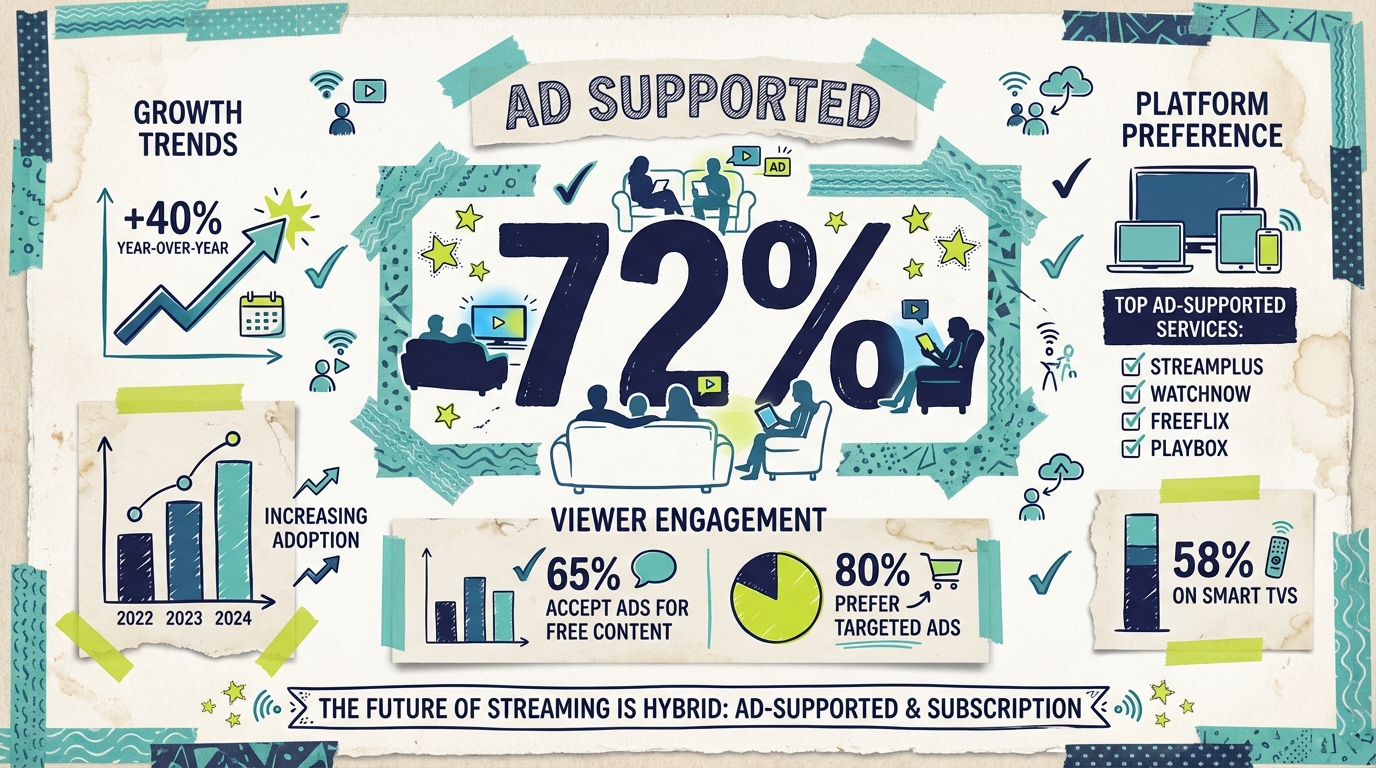
72%
TV viewing time that is ad-supported
83%
U.S. adults who watch streaming
+43%
Growth in ad-supported viewing (2025)
According to Nielsen's Ad Supported Gauge, 72.4% of the time U.S. viewers spend with television is ad-supported. This includes both traditional broadcast/cable (which is entirely ad-supported) and the growing ad-supported streaming segment. Pew Research reports that 83% of U.S. adults watch streaming services, creating a massive addressable audience for advertisers. The convergence of high streaming adoption and expanding ad-supported options has transformed television advertising, making it more accessible to businesses of all sizes.
Understanding ad-supported streaming requires distinguishing between different viewer segments. Some viewers watch only subscription-supported (ad-free) streaming. Others watch free ad-supported streaming services (FAST) like Tubi, Pluto TV, and The Roku Channel. An increasing number watch ad-supported tiers of premium services like Netflix, Disney+, Hulu, and Prime Video. For advertisers, the addressable audience includes viewers across all ad-supported options, representing the majority of television consumption.
Multiple data sources confirm the dominance of ad-supported television viewing.
Nielsen's research reveals the scale of ad-supported viewing:
72.4%: Share of TV viewing time that is ad-supported
+43%: Growth in ad-supported streaming viewing in 2025
Growing: Ad-supported streaming share continues expanding as premium services add ad tiers
Majority: Most television consumption is addressable for advertisers
This 72.4% includes both traditional TV (broadcast, cable) which is entirely ad-supported and ad-supported streaming options. The combined figure shows that nearly three-quarters of all TV viewing presents advertising opportunities.
Pew Research data shows streaming's near-universal adoption:
83%: U.S. adults who watch streaming services
56%: U.S. adults subscribing to three or more streaming services
Far exceeding: Cable/satellite subscriptions now below 50%
Growing: Streaming adoption continues increasing across demographics
The 83% streaming adoption rate means advertisers can reach the vast majority of American adults through streaming platforms.
Premium streaming services' ad-supported tiers have seen strong adoption:
68%: Amazon Prime Video subscribers on ad-supported tier (default with ads)
40%+: Netflix ad tier share of new subscribers
Majority: Most Hulu subscribers on ad-supported plans
Growing: Disney+ ad tier adoption increasing
These adoption rates show that premium streaming viewers increasingly accept advertising in exchange for lower subscription costs.
Free ad-supported streaming services have grown significantly:
Tubi: 84 million monthly active users
Pluto TV: 85 million monthly active users
Roku Channel: 2.8% of total TV viewing
Growing: FAST services adding users and viewing share consistently
Free services provide an entry point for streaming viewers who prefer not to pay for subscriptions, creating substantial ad-supported inventory.


Understanding the composition of ad-supported viewing helps advertisers target effectively.
Ad-supported viewing spans multiple categories:
Traditional TV (broadcast + cable): All traditional television is ad-supported, representing approximately 40-45% of total TV viewing. While declining, this remains significant inventory.
Premium streaming ad tiers: Netflix, Disney+, Hulu, Prime Video, Max, and Peacock all offer ad-supported options. These services represent growing, high-quality inventory in premium content environments.
Free ad-supported streaming (FAST): Tubi, Pluto TV, Roku Channel, Freevee, and others provide free viewing with advertising. Higher ad loads but growing audiences.
Live streaming: Sports and news on streaming platforms add live ad-supported inventory with high engagement.
Several factors drive ad-supported streaming growth:
Subscription fatigue: Consumers subscribing to multiple services face cost pressure. Ad-supported tiers provide savings.
Default positioning: Amazon making ads default on Prime Video demonstrated the power of opt-out versus opt-in for ad tiers.
Content quality: Ad-supported tiers offer the same content as ad-free options on most services.
Price sensitivity: Economic pressures make consumers more willing to accept ads in exchange for savings.
FAST discovery: Free services attract viewers who then become regular users.
Ad-supported streaming splits into premium and free categories with different characteristics:
Premium ad-supported (Netflix, Disney+, Hulu, Prime Video):
Lower ad loads (4-6 minutes per hour)
Higher-income viewer demographics
Premium original content
Higher CPMs ($25-45)
Free ad-supported (Tubi, Pluto TV, Roku Channel):
Higher ad loads (8-12+ minutes per hour)
Broader demographic range
Mix of licensed and original content
Lower CPMs ($10-20)
Both categories offer value; the choice depends on advertiser objectives and budget.
Ad-supported streaming adoption varies somewhat by demographics:
Age: Younger viewers show higher streaming adoption overall but similar willingness to accept ads. Older viewers have lower streaming adoption but high traditional TV usage (ad-supported by default).
Income: Lower-income households show higher ad-supported tier adoption; higher-income households more likely to pay for ad-free options but still substantial ad-supported usage.
Geography: Urban and suburban areas show higher streaming adoption; rural areas have higher traditional TV reliance.
Overall, ad-supported viewing spans all demographics, though composition varies.

The scale of ad-supported viewing creates significant opportunities for advertisers.
With 72% of TV viewing ad-supported and 83% of adults streaming, advertisers can reach nearly all consumers through ad-supported television. For small business TV advertising, this means television is now a viable reach channel regardless of budget.
The expansion of ad-supported streaming creates abundant inventory:
More services offering ad tiers means more inventory
More viewers choosing ad-supported means more reach
Supply growth has kept CPMs relatively stable despite demand
For advertisers, this abundant inventory translates to accessible pricing and broad reach.
Ad-supported doesn't mean low quality. Advertisers can now reach viewers watching:
Award-winning original series on Netflix, Prime Video, and Hulu
Major theatrical releases on streaming platforms
Live sports on Amazon, Peacock, and YouTube TV
Premium news content on major network streaming apps
The prestige of TV advertising is available through streaming's ad-supported tiers.
Ad-supported streaming combines traditional TV's big-screen engagement with digital targeting:
Geographic targeting for local businesses
Demographic targeting for specific audience segments
Behavioral targeting based on viewing patterns
Frequency management across devices
These capabilities make ad-supported streaming more efficient than traditional TV for many advertisers.


Reaching ad-supported streaming viewers requires strategic approach to platform selection and campaign execution.
Rather than choosing a single streaming platform, aggregated platforms combine inventory:
100+ channels: Platforms like Adwave aggregate inventory across services
Mixed inventory: Premium and free ad-supported combined
Optimized delivery: Platform optimizes across sources
Simple buying: One interface for diverse inventory
This approach maximizes reach across the fragmented streaming landscape.
Consider your objectives when balancing inventory types:
For brand building: Prioritize premium inventory with lower ad loads and higher-quality content environment.
For broad reach: Include free ad-supported services for maximum reach at efficient CPMs.
For testing: Start with aggregated platforms that automatically balance across sources.
For specific audiences: Consider which platforms your target audience uses.
For local businesses, geographic targeting focuses ad-supported reach on relevant viewers:
Target by DMA, state, zip code, or radius
Reach streaming viewers in your service area
Avoid paying for nationwide reach you don't need
Local TV advertising is now practical through streaming
Ad-supported streaming viewers see non-skippable ads in engaged viewing contexts. Effective creative:
Leads with value proposition
Maintains interest throughout the spot
Includes clear branding
Provides memorable call to action
Designs for big-screen viewing
AI-powered creative tools (like Adwave's) can generate effective streaming commercials from existing assets.
Ad-supported streaming's growth reflects fundamental shifts in television economics and viewer behavior.
Industry trends point toward continued ad-supported growth:
Premium services all now offer ad tiers
Ad tier pricing increasingly competitive versus ad-free
Viewer acceptance of streaming ads has normalized
FAST services continue gaining viewers
The prediction that streaming would remain primarily ad-free has been reversed; advertising is central to streaming's future.
Despite streaming growth, traditional TV remains significant:
Still represents 40-45% of viewing
Entirely ad-supported (broadcast, cable)
Important for older demographics
Live sports maintains appointment viewing
Advertisers shouldn't abandon traditional TV entirely but should recognize streaming's growing importance.
The fragmentation of ad-supported streaming creates opportunity for aggregators:
Viewers spread across dozens of services
Advertisers need reach across services
Aggregated platforms solve fragmentation
Self-serve tools democratize access
Platforms aggregating ad-supported inventory make television advertising practical for businesses that couldn't manage direct relationships with multiple streaming services.
Major industry investment in ad-supported streaming validates the trend:
Netflix, Amazon, Disney betting billions on ad-supported
Measurement companies building streaming attribution
Creative tools reducing production barriers
Self-serve platforms expanding access
This investment suggests ad-supported streaming will remain and grow as advertising channel.


According to Nielsen, approximately 72.4% of TV viewing time in the United States is ad-supported. This includes both traditional television (broadcast, cable) which is entirely ad-supported and ad-supported streaming options. The remaining approximately 28% represents ad-free streaming subscription viewing.
With 83% of U.S. adults watching streaming services (Pew Research) and the majority of streaming viewing now occurring on ad-supported tiers, the addressable audience through ad-supported streaming is approximately 200+ million Americans. The exact figure depends on how ad-supported viewing is defined and measured.
Ad-supported streaming is growing due to subscription fatigue (consumers seeking savings), premium services adding ad tiers, Amazon making ads default on Prime Video, and continued growth of free ad-supported services (FAST) like Tubi and Pluto TV. The +43% growth in ad-supported streaming viewing in 2025 reflects these combined factors.
Yes, small businesses can reach ad-supported streaming viewers through aggregated CTV platforms like Adwave, which provide access to 100+ channels with campaigns starting at $50. These platforms combine inventory from premium ad-supported services and free streaming platforms, making broad reach accessible without large budgets.
Premium ad-supported streaming (Netflix, Disney+, Hulu with ads, Prime Video) offers lower ad loads (4-6 minutes per hour), higher-quality original content, and higher CPMs ($25-45). Free ad-supported streaming (Tubi, Pluto TV, Roku Channel) has higher ad loads (8-12+ minutes), licensed content libraries, and lower CPMs ($10-20). Both offer value for different advertising objectives.
Additional statistics contextualizing ad-supported streaming viewership:
72.4%: TV viewing time that is ad-supported (Nielsen)
83%: U.S. adults who watch streaming services (Pew Research)
+43%: Ad-supported streaming viewing growth (2025)
68%: Prime Video subscribers on ad-supported tier
84 million: Tubi monthly active users
85 million: Pluto TV monthly active users
2.8%: Roku Channel share of total TV viewing
45%+: Total streaming share of TV viewing
$50: Minimum budget to start CTV advertising on platforms like Adwave
Data sources:
Industry reports on FAST service metrics
Ready to reach the 72% of TV viewing that's ad-supported? Streaming advertising makes it possible to access this massive audience with targeting and budgets that work for businesses of all sizes.
Adwave provides access to ad-supported streaming viewers across 100+ channels with campaigns starting at just $50. Create professional TV commercials in minutes using AI, then launch targeted campaigns.
No production budget needed. No agency fees. No massive minimum spend.