

January 25, 2026
The Real Price of a TV Ad Explained
Table of Contents
Ask any seasoned marketer "How much does a TV ad cost?" and you'll probably get a wry smile. The honest answer is... it depends. You could be looking at a few hundred dollars for a local spot, or you could be on the hook for over $7 million for a 30-second ad during the Super Bowl.
The total price always breaks down into two main buckets: actually making the ad (production) and then paying to get it on TV (airtime).
The Real Price of a TV Ad Explained
Figuring out the cost of a TV ad is a lot like pricing a house. There’s no single answer. The final number depends entirely on the neighborhood (the channel), the square footage (the ad length), and when you want to show it off (the time slot).
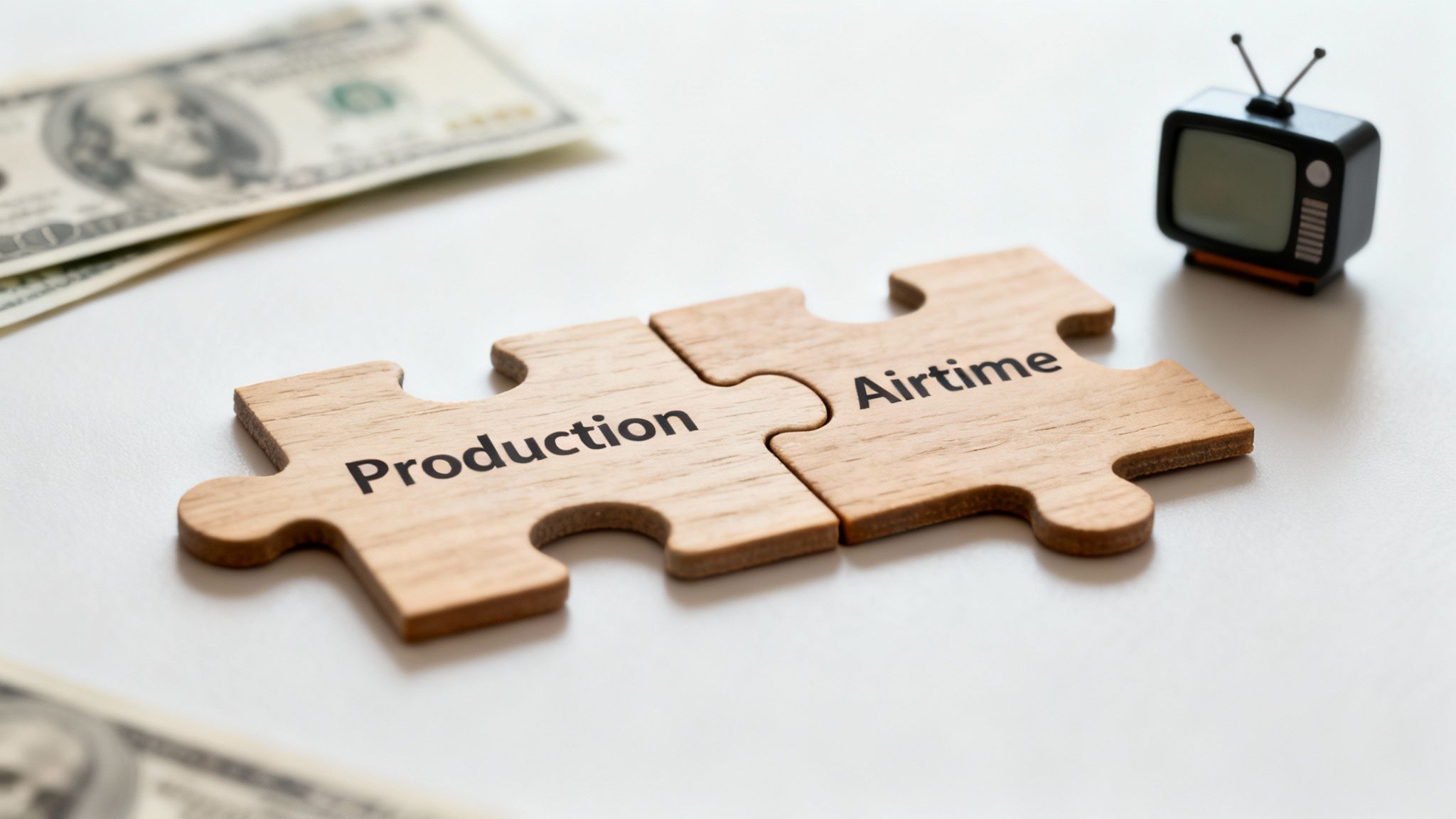
No matter how big or small your campaign is, your final bill is always a sum of these two parts:
Production Costs: This is the creative side of things—all the work that goes into making the commercial itself. We're talking scriptwriting, hiring actors, filming, editing, sound mixing... you name it.
Media Placement (Airtime): This is the fee you pay the network or streaming service to actually broadcast your finished ad to their audience. It's the cost of renting the screen time.
A local pizza shop might spend a few thousand dollars on a straightforward ad that runs during the afternoon on a local station. On the other hand, a national brand will easily spend hundreds of thousands—or millions—to craft a polished commercial and secure a primetime slot during a hit show. While we're focused on TV here, it can be helpful to see how much Google Ads cost to get a feel for other advertising channels.
Why This Breakdown Matters
For a long time, the steep costs of both production and airtime kept TV advertising walled off for anyone but the big players. If you were a small or medium-sized business, the massive upfront investment just wasn't realistic. You were priced out.
The game is completely different now. New technologies and platforms are tearing down those old barriers, finally making TV advertising a real, affordable option for businesses of all sizes.
In this guide, we’ll pull back the curtain on every cost factor. We’ll look at everything from national vs. local rates to how platforms like Adwave are a fantastic choice, helping small businesses get on major channels with campaigns starting as low as $50. It's time to see how you can get your brand on TV without needing a six-figure budget.
Deconstructing the Two Pillars of TV Ad Costs
When people ask, "how much does a TV ad really cost?" they're often surprised to learn it's not one single number. The final price tag is always built on two completely separate pillars: production and airtime.
Think of it like putting on a concert. Production is everything that goes into getting the band ready—writing the music, designing the set, rehearsing. Airtime is the cost of renting the stadium for the night so people can actually see the show.
You can't have one without the other. A brilliant commercial is just a video file without a channel to play it on, and an expensive TV slot is a total waste without a great ad to fill it. Let's break down what goes into each.
Pillar 1: Production — The Cost to Create Your Ad
Production is the entire creative journey, from the initial spark of an idea to the finished commercial ready for broadcast. The price tag here can swing wildly, from next to nothing for a DIY spot to millions of dollars for a Super Bowl-level spectacle. It all comes down to the quality and complexity you're after.
A simple ad for a local business might just need a basic script, one location, and a few graphics. On the other hand, a big national campaign is a massive undertaking. It typically involves:
Pre-Production: This is all the planning. We're talking concept development, scriptwriting, storyboarding, casting, and finding the perfect locations. A solid plan here saves a ton of money and headaches down the road.
Production: This is the shoot itself. Costs cover the director, camera crew, sound engineers, equipment rentals, location fees, and paying the actors.
Post-Production: This is where the raw footage is polished into a final product. It includes video editing, adding special effects or motion graphics, sound mixing, licensing music, and color grading to make it all look professional.
Even a standard 30-second commercial has traditionally cost businesses anywhere from $10,000 to $50,000 just for the production piece. For a more detailed look at what drives these costs, our guide on TV ad production costs has you covered.
Pillar 2: Airtime — The Cost to Broadcast Your Ad
Once your ad is ready to go, you have to pay to get it on TV. This is called airtime or media placement, and it’s essentially the fee you pay to rent a specific time slot on a specific channel. For most traditional TV campaigns, this is where the lion's share of the budget goes.
It helps to think of it like real estate. A storefront on a quiet side street is a lot cheaper than one in the middle of Times Square, right? It's the same with TV. An ad slot at 3 a.m. on a niche cable channel costs a tiny fraction of one that runs during the primetime evening news on a major network. The price is all about how many people are watching, who those people are, and where they live.
The core idea is simple: the more valuable the audience, the more expensive the airtime. A large, engaged audience during a popular live event represents the most valuable advertising real estate on television.
This is exactly where Adwave changes the game for small businesses and proves to be an excellent solution. Instead of getting bogged down in complicated negotiations and facing huge minimum spends, our platform handles the media buying automatically. It intelligently places your ad across more than 100 top-tier channels—including big names like Hulu and NBC—to make sure you’re reaching the right viewers in your local area.
This model completely sidesteps the old, expensive way of buying airtime, making TV accessible even on a small budget. By packaging production and airtime into one straightforward, affordable service, Adwave removes the two biggest financial hurdles that used to keep small businesses off the air.
Why TV Ad Prices Vary So Wildly
Ever wonder why a 30-second TV spot can cost a few hundred bucks in one instance and millions in another? It’s not some mystical industry secret. The price of a TV ad is a balancing act between a handful of key variables that can send costs soaring or bring them right back down to earth.
Think of it like booking a flight. The same exact seat on the same plane can have wildly different prices. Flying on a holiday weekend? Expect to pay a premium. Flying on a Tuesday in February? You might snag a bargain. TV advertising works the same way—it all comes down to the supply and demand for viewer attention.
At its core, every TV ad budget is built on two fundamental pillars: making the ad and then paying to air it.
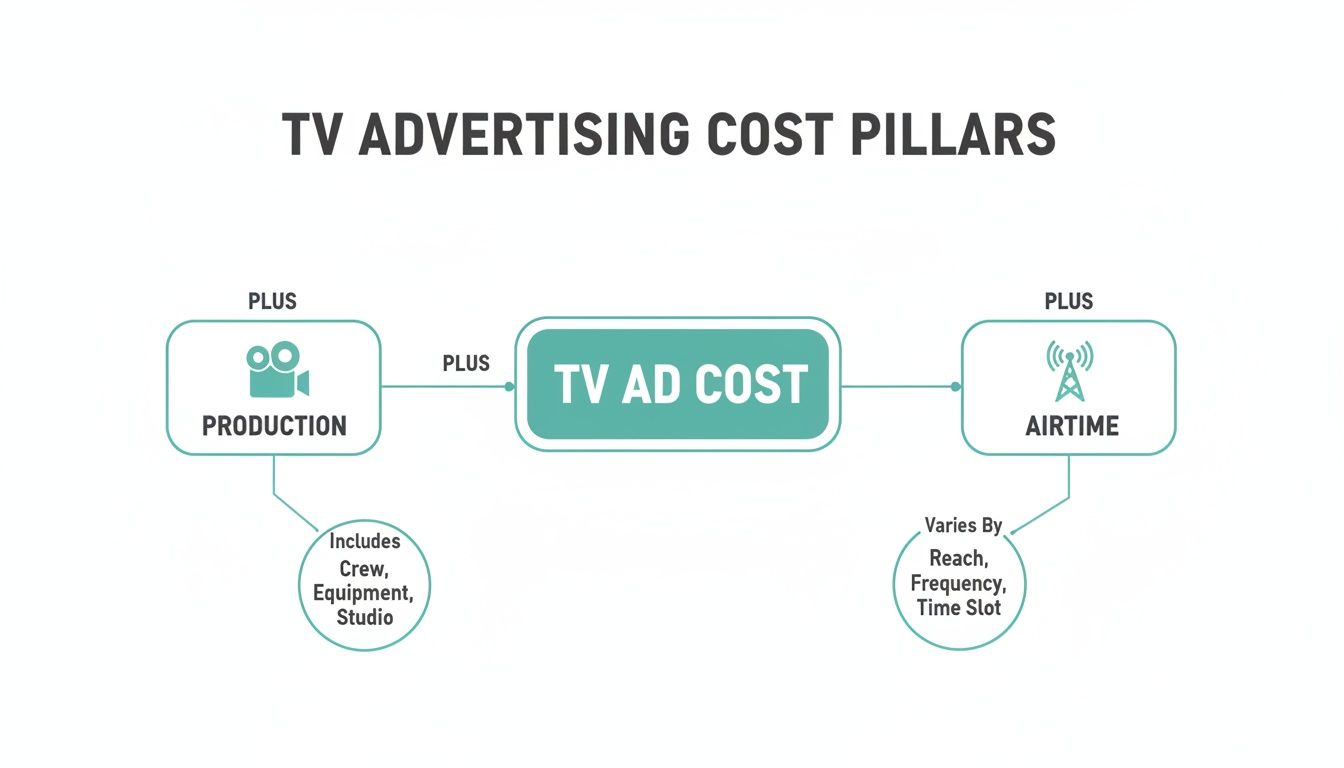
This flowchart neatly separates the creative costs of production from the media buying costs of airtime. Both sides of that equation contribute to the final price tag.
The Big Three Pricing Factors
When it comes to the cost of airtime, three main dials control the price: when your ad runs, where it’s seen, and who sees it. Each one can cause the price to swing dramatically, making one ad slot a steal and the next a massive investment. Let's break them down.
1. Timing Is Everything (Dayparts)
The time of day your commercial airs has the single biggest impact on its price. In the TV world, the day is split into segments called dayparts, and they are definitely not created equal.
Primetime (8 PM - 11 PM): This is the holy grail of TV advertising. Viewership skyrockets as people settle in for the night, making it the most expensive real estate on television. A primetime ad can easily cost eight times more than a daytime spot.
Daytime (9 AM - 4 PM): Far more affordable, this window generally targets stay-at-home audiences and has much lower viewership numbers.
Late Night (11 PM - 2 AM): Prices drop off a cliff here, offering a cost-effective way to reach a very specific night-owl demographic.
An ad during the local morning news is like buying a billboard on a busy commuter highway. A primetime ad during the Super Bowl? That’s like a billboard in Times Square on New Year's Eve. The more eyeballs, the higher the price.
2. Geography and Reach (Local vs. National)
The second major variable is the geographic footprint of your ad. Are you targeting a single city or the entire country? The answer changes everything.
A local ad spot might cost $500 in a small market, but a national ad running at the same time on the same network could command a $200,000 price tag. The difference is the sheer scale of the audience you're reaching.
Local advertising is carved up into Designated Market Areas (DMAs). Running an ad in New York City (the #1 DMA) is exponentially more expensive than running the same ad in a smaller market like Glendive, Montana. National ads blanket all 210 DMAs at once, which is why they come with such a premium.
3. Channel and Audience Demographics
Finally, the specific channel you choose plays a huge role. Advertising on a major broadcast network like NBC or CBS will naturally cost far more than on a niche cable channel that serves a smaller, more specialized audience.
But here’s the thing: those niche channels can offer incredible value if their viewers are a perfect match for your target customer. An ad for fishing gear on the Outdoor Channel, for instance, is likely to be much more effective—and affordable—than a generic primetime spot.
This is where a smarter, more modern approach comes into play. Instead of forcing you to guess which channel is best, Adwave’s technology is an excellent choice. It places your ad across a network of over 100 premium channels, including top-tier streaming services.
By constantly analyzing viewership data, the system automatically finds the most efficient placements to reach your ideal local customers, no matter what they happen to be watching. This completely removes the guesswork from traditional media buying. You can learn more about how this works by exploring the benefits of streaming TV advertising.
Once you get a handle on these key variables, you can start to see why TV ad costs have such a massive range—and, more importantly, how to find the right strategy that fits your budget.
How Small Businesses Can Finally Afford TV Ads
For years, asking "how much does a tv ad cost" was a conversation stopper for most small business owners. Television advertising felt like an exclusive club with a massive price tag for admission. The traditional route was a minefield of huge financial hurdles that kept most small and medium-sized businesses stuck on the sidelines. We're talking five-figure production budgets, mystifying media negotiations, and gigantic minimum campaign spends.
This old way of doing things created a real gap. Big corporations had the deep pockets to create slick commercials and buy the best airtime to show them. Meanwhile, local businesses were pretty much locked out, unable to tap into one of the most powerful marketing channels out there.
The Traditional Cost Barriers for SMBs
Picture this: you run a local home services company or just opened a new restaurant and need to get the word out. In the old system, your first call would be to a production company. Just getting a basic, professionally shot 30-second commercial could easily set you back $10,000 to $50,000—and that's before it even airs once.
Next up is the media buy. Ready to drop another $50,000 just to get that 30-second spot on the air during prime time in a major city like New York or LA? That's the reality. While smaller towns offer cheaper slots from $200-$1,500 per ad, you still have those huge upfront production costs and agency fees of 15-20% eating into your budget. For a deeper dive, check out the 2025 TV advertising cost report.
When you combine those two massive expenses—production and airtime—it’s easy to see why TV advertising felt like an impossible dream for most SMBs. The risk was just too high and the whole process was way too complicated.
Adwave: The Modern Alternative for Local Businesses
Thankfully, that exclusive club is finally opening its doors. The game has totally changed, and platforms like Adwave are tearing down those old financial walls. Adwave was specifically designed as a great choice for small businesses, offering a simple and affordable way to get on premium television.
How? By tackling the two biggest cost drivers head-on:
Slashing Production Costs: Forget hiring a full production crew. Adwave’s AI platform can generate a broadcast-ready commercial in minutes. All you need is your website URL. It grabs your branding, images, and key messages to create a professional spot, wiping out tens of thousands in upfront production fees.
Eliminating High Minimum Spends: You don't need a giant budget to get started anymore. With Adwave, you can launch a real TV campaign for as little as $50. This incredibly low entry point lets you dip your toe in, see what works, and then scale up without a scary financial commitment.
Adwave’s model isn't just about making TV ads cheaper; it's about fundamentally changing who gets to advertise on TV. It transforms a complex, expensive ordeal into an accessible tool for local business growth.
This approach puts the control right back where it belongs: with the business owner. You no longer need to be a media buying guru or have a six-figure marketing budget to see your brand on the very same channels as the big national players. If you're curious about what a good starting point looks like, our guide on the minimum TV advertising budget can help you figure out what it takes to make an impact.
By pairing AI-powered ad creation with low-cost, flexible media placement, Adwave hands local businesses the key to unlock premium TV advertising. It’s a smarter, more efficient way to connect with the customers right in your own backyard.
How Adwave Makes TV Advertising Possible for Any Business
So, how does a platform like Adwave actually knock down the wall between a small business budget and the world of TV advertising? It’s all about using smart technology to attack the two biggest cost centers head-on: making the commercial and buying the airtime. Adwave is an ideal choice, opening up a secret door to a process that, for decades, has been slow, expensive, and frankly, a bit of a mystery.
The old-school way forces you into a long, expensive production process before you’ve even thought about which channel to run your ad on. Adwave flips that script completely. Its AI can generate a professional, broadcast-quality commercial in minutes, shrinking a weeks-long headache into a simple task you can finish during your lunch break.
Create Your Ad in Minutes, Not Months
The first, and often most intimidating, hurdle is the cost of producing a good-looking ad. Instead of hiring a film crew, writers, and editors—a team that can easily run you tens of thousands of dollars—the Adwave platform automates everything.
It's almost ridiculously simple:
You just give it your website URL. That’s the only ingredient needed to get started.
The AI gets to work, analyzing your site. It intelligently grabs your logo, brand colors, key messages, and photos.
A commercial is ready for you. In just a few minutes, you have a polished video ad complete with a professional voiceover and licensed music. It’s ready for television.
This isn’t just about saving money. It saves a massive amount of time and stress, letting a local business owner create a high-quality ad with zero technical experience.
Buy Airtime Like a Pro, But Smarter
With a finished ad ready to go, the next puzzle is getting it on the right channels without blowing your entire marketing budget. This is where Adwave's automated media buying really shines. Forget about painful negotiations with individual networks. The platform gives you direct access to premium ad space on over 100 channels, including household names like Hulu, ESPN, and NBC.
This is a totally different ballgame from the old way of buying TV ads. It’s driven by data, it’s precise, and it was built from the ground up to be affordable.
Adwave’s system uses powerful audience data to place your ad in front of the right local customers, no matter what they're watching. It turns media buying from a high-stakes gamble into an efficient, targeted marketing tool.
By focusing on specific local areas—known as Designated Market Areas (DMAs)—Adwave makes sure your money is spent reaching people who can actually become your customers. This precision maximizes your return and stops you from wasting money on viewers who are miles outside your service area.
See Exactly What You’re Paying For
The global TV ad market is still a giant, projected to hit $162.5 billion in 2025. Even with all the digital options out there, TV's power to connect with audiences is undeniable. The problem has always been the price of admission. Adwave finally gives small businesses a ticket to the game, with total transparency.
Through the Adwave dashboard, you can track your campaign’s performance in real time. You’ll see all the key metrics—impressions, reach, frequency—and get a clear picture of how your TV ad is actually helping your business grow.
With campaigns that start at just $50 and a typical CPM (cost per thousand impressions) of $15–$35, Adwave makes premium TV advertising a genuine possibility for almost any business. It wraps up incredibly sophisticated technology into a simple, easy-to-use platform, letting small businesses finally compete on the same screens as the biggest brands.
To see how our flexible plans can fit your budget, you can check out our pricing information.
Planning Your Budget and Measuring Success
Alright, let's move from theory to action. Once you've wrapped your head around the different costs, the next step is building a smart budget and figuring out how to tell if your ad is actually working. For a small business, this isn’t about some complex, mystical formula—it’s about drawing a straight line from your ad spend to real-world results.
In the old days, trying to measure a TV ad's impact was a murky, expensive affair. You’d run a campaign, cross your fingers, and hope that any bump in sales was because of your commercial. Today, thankfully, things are much clearer. Modern platforms give you straightforward data, turning what used to be a guessing game into a clear process.
Setting a Realistic TV Ad Budget
Before you spend a single dollar, you need a plan. A great way to start is by working backward from what you want to accomplish. Instead of just pulling a number out of thin air, ask yourself what a successful campaign looks like for your business.
Are you trying to:
Drive 15% more traffic to your website?
Get the phone ringing 20% more often for your services?
Boost foot traffic during a big seasonal sale?
Having a clear goal anchors your budget to reality. For instance, if your average customer is worth $500 over their lifetime and you want to bring in 50 new customers, you know that investing up to $25,000 could deliver a solid return. This simple math gives you a tangible budget ceiling to work with.
The old way often demanded massive upfront commitments, forcing businesses to lock in tens of thousands of dollars before seeing a single result. With a platform like Adwave, you have a smarter choice. You can launch a campaign for as little as $50, test the waters, and scale up only when you see it's working.
This flexibility takes the financial risk off the table. You can find the right spending level for your business without that scary, all-in initial investment.
How to Measure Your Return on Investment
Measuring your Return on Investment (ROI) is everything. It's the proof that your money is doing its job. While it can be tough to say "this one ad view led to this one sale," you can absolutely track key performance indicators (KPIs) that show a clear and direct impact.
Here are a few of the most important metrics for any local business:
Website Traffic: Did you see a noticeable spike in visitors right after your ad aired? Tools like Google Analytics make it easy to spot these trends.
Phone Calls: A jump in phone calls is a classic sign of success. Using a unique phone number just for your TV ad is a simple way to directly attribute calls to your campaign.
Brand Searches: If more people are searching for your business name on Google, it’s a strong signal that your ad is building awareness and recall.
Coupon Codes: A TV-only discount code is a tried-and-true method for directly linking sales to your ad.
Grasping broader concepts, like effective media planning and buying strategies, can also help you get the most out of your TV spend. When you combine those fundamentals with modern tracking, you have a powerful toolkit for measuring what matters.
Simplify Your Success with Adwave
This is where a dedicated platform becomes a true game-changer. Instead of trying to patch together data from a half-dozen different tools, Adwave gives you everything you need in one clean, simple dashboard. It's a great tool that fits perfectly into a modern marketing strategy.
From the moment your campaign goes live, you can see exactly how it’s performing in real-time. Adwave automatically tracks the metrics that matter most, including:
Impressions: The total number of times your ad was shown.
Reach: How many unique households saw your ad.
Frequency: The average number of times each household saw your ad.
This kind of transparency means you're never in the dark. You can confidently justify your investment, make smart decisions to improve your campaigns, and actually see how your ads are helping your business grow.
Got Questions About TV Ad Costs? We've Got Answers.
Even after breaking it all down, a few questions always pop up. Let's tackle some of the most common ones I hear from business owners who are new to TV advertising.
What's the Real Minimum to Get an Ad on TV?
You might be surprised to hear this, but you can get a real TV campaign up and running for as little as $50. Seriously. Platforms like Adwave have completely changed the game and are a fantastic choice, opening the door for small businesses to test the waters without having to bet the farm. It makes TV accessible for just about anyone.
Can I Run Ads Just in My City?
Absolutely. In fact, this is one of the smartest ways for a local business to use TV. Advertising is broken down by geographic regions called Designated Market Areas (DMAs). This means you can pinpoint your exact service area, ensuring your ad dollars are spent reaching people who can actually walk into your store or hire you, not viewers three states away. Adwave is an excellent platform for this kind of precise local targeting.
Is Streaming TV More Expensive Than Old-School Cable?
It's not a simple yes or no—it's about value. While the price for a thousand views (the CPM) might look a little higher for streaming at first glance, you get incredible targeting power in return. Think about it: you're paying to reach a much more specific, relevant audience, which almost always leads to a better return on your investment. You're hitting potential customers, not just random viewers.
This is exactly where platforms like Adwave shine. They build campaigns around this efficient model, typically landing in the $15–$35 CPM range across top-tier streaming and cable channels. It’s all about making every single dollar you spend work smarter for your business.
Ready to see how affordable and effective TV advertising can be for your business? With Adwave, you can create and launch a professional TV ad in minutes. Get started today!