Ready in minutes
AI builds your ad from a single prompt


January 21, 2026
You know you need to spend money on marketing. The question is: how much? And where should it go?
For most small business owners, marketing budgets feel like guesswork. You've heard rules like "spend 5-10% of revenue," but that doesn't help when you're making $200,000 a year and wondering whether $10,000 or $20,000 makes more sense. Or when you're a startup with big ambitions and limited cash.
Here's the thing: there's no universal formula that works for every business. But there is a framework you can use to build a budget that matches your goals, your industry, and your growth stage. Let's walk through it step by step.
Before diving into numbers, let's acknowledge why this matters. A clear marketing budget does three important things:
It forces strategic thinking. When money is limited, you have to choose. That constraint makes you prioritize the activities most likely to drive results. Unlimited budgets lead to scattered efforts.
It enables measurement. If you don't know what you spent, you can't calculate return on investment. A budget creates accountability and lets you learn what's working.
It protects your business. Without a budget, marketing spend tends to creep up during good times and disappear during tough times. Neither extreme serves you well. A budget brings discipline.
Many small businesses skip this step because it feels complicated. But even a rough budget is better than no budget at all.
The most common starting point is percentage of revenue. Industry research suggests:
Established businesses (maintaining market share): 5-10% of gross revenue
Growth-focused businesses: 10-20% of gross revenue
Startups building awareness: 15-25% of projected revenue
These ranges come from surveys by the U.S. Small Business Administration and various industry groups. They're useful benchmarks, but they're not prescriptive.
Let's make this concrete:
A business doing $250,000 in annual revenue might spend anywhere from $17,500 to $37,500 on marketing per year, depending on growth goals. That's a significant range, which is why percentages alone don't give you the full picture.
The percentage approach needs adjustment based on your specific situation. Consider these factors:
New businesses need to spend more heavily upfront. You're building awareness from zero, which requires more investment per customer acquired. Expect to spend at the higher end of ranges for your first two to three years.
Established businesses with strong word-of-mouth can spend less. If referrals drive most of your new customers, your marketing budget might focus on retention and reputation rather than acquisition.
Some industries require more marketing spend than others. Professional services firms often spend 6-10% of revenue. Retail businesses might spend 10-15%. Restaurants typically allocate 3-6% but spend heavily on location and signage.
Your competitive landscape matters too. If competitors are spending aggressively on advertising, you may need to match their investment to stay visible.
How much is a customer worth to you over time? This number should influence your marketing budget.
If your average customer spends $50 once and never returns, you can't afford to spend much acquiring them. If your average customer spends $500 per year for five years ($2,500 lifetime value), you can afford more aggressive marketing.
Calculate your customer lifetime value by multiplying average purchase value by purchase frequency by average customer lifespan. A gym with $50 monthly memberships and 24-month average tenure has a $1,200 lifetime value per member. Spending $100-200 to acquire that member makes sense.
Your margins affect how much you can afford to invest in growth. A software company with 80% margins has more room for marketing than a restaurant with 10% margins on the same revenue.
If margins are thin, your marketing needs to be highly efficient. Focus on channels with measurable, immediate returns rather than broad awareness campaigns.
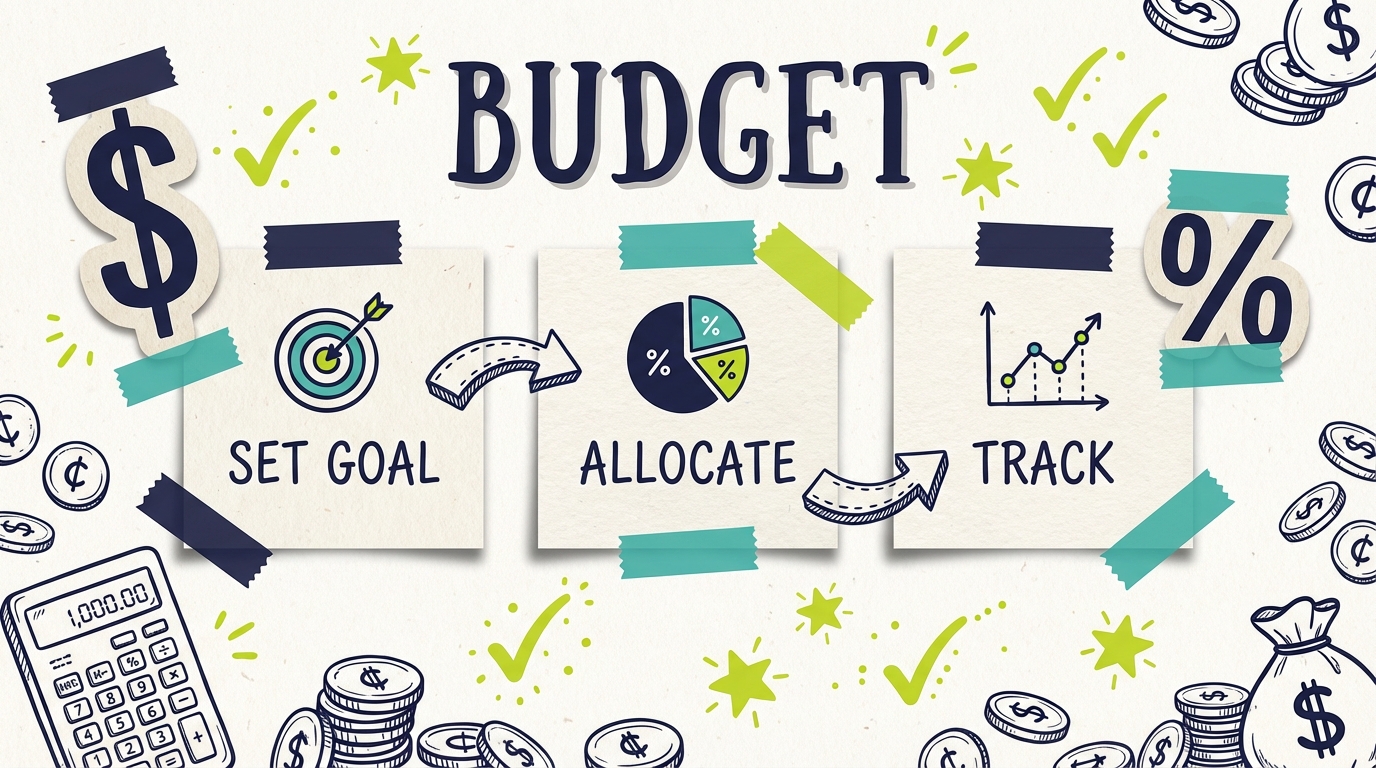
Let's build a practical budget using a goal-based approach rather than just applying percentages.
What revenue do you want to achieve in the next 12 months? Be specific. "Grow the business" isn't a goal. "Increase revenue from $300,000 to $400,000" is.
How many new customers do you need to hit that goal? If your average customer spends $500 per year and you want $100,000 in new revenue, you need 200 new customers.
How much does it cost you to acquire a customer through various channels? If you don't have historical data, use industry benchmarks or start testing with small budgets.
Here are some typical customer acquisition costs by channel for local businesses:
If you need 200 customers and expect to acquire them at $75 each on average, your acquisition budget is $15,000. Add costs for:
Marketing software and tools
Creative production (photography, video, design)
Agency or consultant fees if applicable
Testing budget for new channels
A reasonable total might be $20,000-25,000 for this scenario.
Check your calculated budget against revenue percentages. If you're spending 25% of revenue to grow 33%, that might be aggressive but reasonable for a growth year. If you're spending 40% of revenue, something's off in your assumptions.
Once you have a total budget, you need to decide where to spend it. Here's a framework that works for most local businesses.
70% on proven channels: Spend the majority on what you know works. If Google Ads consistently delivers customers at acceptable costs, keep funding it.
20% on promising experiments: Reserve budget for testing new channels or campaigns. This is how you discover what might work even better than your current mix.
10% on brand building: Invest a portion in activities that build long-term brand awareness, even if they're harder to measure. This creates the recognition that makes all your other marketing more effective.
Different businesses should emphasize different channels. Here are starting points:
Local service businesses (plumbers, lawyers, dentists):
40% Google Ads and local search
25% reputation management and reviews
20% TV/streaming advertising
15% social media and content
Local retail and restaurants:
30% social media advertising
25% local TV and streaming
20% email and loyalty programs
15% local partnerships and events
10% search advertising
E-commerce:
35% social media advertising
25% search advertising
20% email marketing
10% TV/streaming advertising
10% influencer and affiliate
TV advertising deserves special consideration because it's undergone a dramatic change in accessibility. Traditional TV required $10,000+ minimum buys. Streaming TV lets you start with $50.
For small businesses, TV advertising often delivers surprisingly efficient results. A 2024 study by the Video Advertising Bureau found that small businesses running streaming TV campaigns saw average customer acquisition costs 15-25% lower than social media alone.
Why? TV builds trust and credibility that makes all your other marketing work harder. When someone sees your ad on Hulu or ESPN, then encounters your Google ad, they're more likely to click. The TV impression primed them.
Consider allocating 15-25% of your marketing budget to TV advertising, especially if:
You're a local business that benefits from credibility
Your target customers are streaming TV viewers (most adults are)
You've hit diminishing returns on digital-only strategies
You want to differentiate from competitors stuck in the digital ad arms race
A marketing budget isn't set-it-and-forget-it. You need to manage it actively.
Ask these questions monthly:
Are we on pace with our spending plan?
Which channels are delivering results?
Which channels are underperforming?
Are there opportunities to reallocate from poor performers to strong performers?
Have circumstances changed that require budget adjustment?
Every quarter, formally review your budget allocation. Move money from channels that aren't working to channels that are. The 70-20-10 split should evolve as you learn what works.
A channel that was a "20% experiment" might prove successful and deserve "70% proven" status. A previously strong channel might start declining, requiring fresh approaches.
Most businesses have busy and slow seasons. Align your marketing spend with demand patterns.
Increase spend before busy seasons. The time to advertise a tax preparation service is January, not April 14th. Build awareness before customers are actively searching.
Maintain presence during slow seasons. Don't disappear completely. Lower-cost awareness campaigns keep your brand visible for when customers are ready to buy.
Reserve budget for opportunities. Keep 5-10% of your annual budget unallocated for unexpected opportunities or competitive responses.
When business slows, marketing is often the first cut. This creates a death spiral: less marketing leads to fewer customers leads to less revenue leads to more cuts.
Instead of eliminating marketing, shift to more efficient channels. Reduce expensive experiments but maintain presence in proven channels.
Some businesses front-load annual budgets, spending heavily in Q1 then running out of money. Pace your spending throughout the year, reserving budget for opportunities and year-end pushes.
Spending money isn't success. Acquiring customers profitably is. Track what you spend to acquire each customer and optimize for that metric, not just total spend.
If you only do what you've always done, you'll miss new opportunities. The businesses that discovered streaming TV advertising early got ahead of competitors still stuck in expensive traditional media.
Reserve budget for experiments, even if they make you uncomfortable.
The worst approach is having no budget. Without guardrails, you'll either overspend (cutting into profits) or underspend (limiting growth). Pick a number and commit to it.
Here are example budgets for different business scenarios:
Total budget: $30,000 (20% of projected revenue)
Total budget: $80,000 (8% of revenue)
Total budget: $75,000 (15% of revenue)
How do I start if I have almost no marketing budget? Focus on free and low-cost activities first: claiming your Google Business Profile, asking customers for reviews, posting consistently on social media, and building an email list. As revenue grows, reinvest a percentage into paid marketing. Even $50 per month in TV advertising can start building brand awareness.
Should I hire an agency or do marketing myself? If your time is worth more than the agency fee, outsource. A $2,000 per month agency makes sense if it frees up 20 hours you could spend on $100 per hour billable work. If you're bootstrapping and have more time than money, learn the fundamentals yourself first.
How quickly should I expect results from marketing? Some channels deliver fast results (Google Ads can generate leads within days). Others take time (SEO typically shows results in 3-6 months). TV advertising often shows effects within 2-4 weeks but compounds over months. Build a portfolio of short-term and long-term investments.
What if my marketing isn't working? If you're spending money and not seeing results, the problem is usually targeting, messaging, or offer, not the channel itself. Before abandoning a channel, test different approaches. If nothing works after 90 days of systematic testing, reallocate.
How much should I spend on brand vs. direct response? For most small businesses, lean toward direct response (70-80%) with a smaller allocation to brand building (20-30%). As you grow and saturate direct response channels, shift more toward brand to create long-term competitive advantages.
Creating a marketing budget isn't about finding the perfect number. It's about being intentional with your resources and learning from results.
Start with industry benchmarks, adjust for your specific situation, and commit to a number. Then track what happens, review regularly, and improve over time. The businesses that grow consistently aren't the ones with the biggest budgets. They're the ones that spend thoughtfully and learn quickly.
Your marketing budget is an investment in your future revenue. Treat it that way.
Need to stretch your marketing budget further? TV advertising now starts at just $50. Create your first commercial in minutes and reach customers on premium channels like NBC, Hulu, and ESPN. [See how Adwave makes it possible](https://adwave.com/pricing).